The HELOC Trap: Why Trading Your Credit Card Debt for Home Debt Could Wreck Your Family
By Your Debt Advocate · Updated 2026
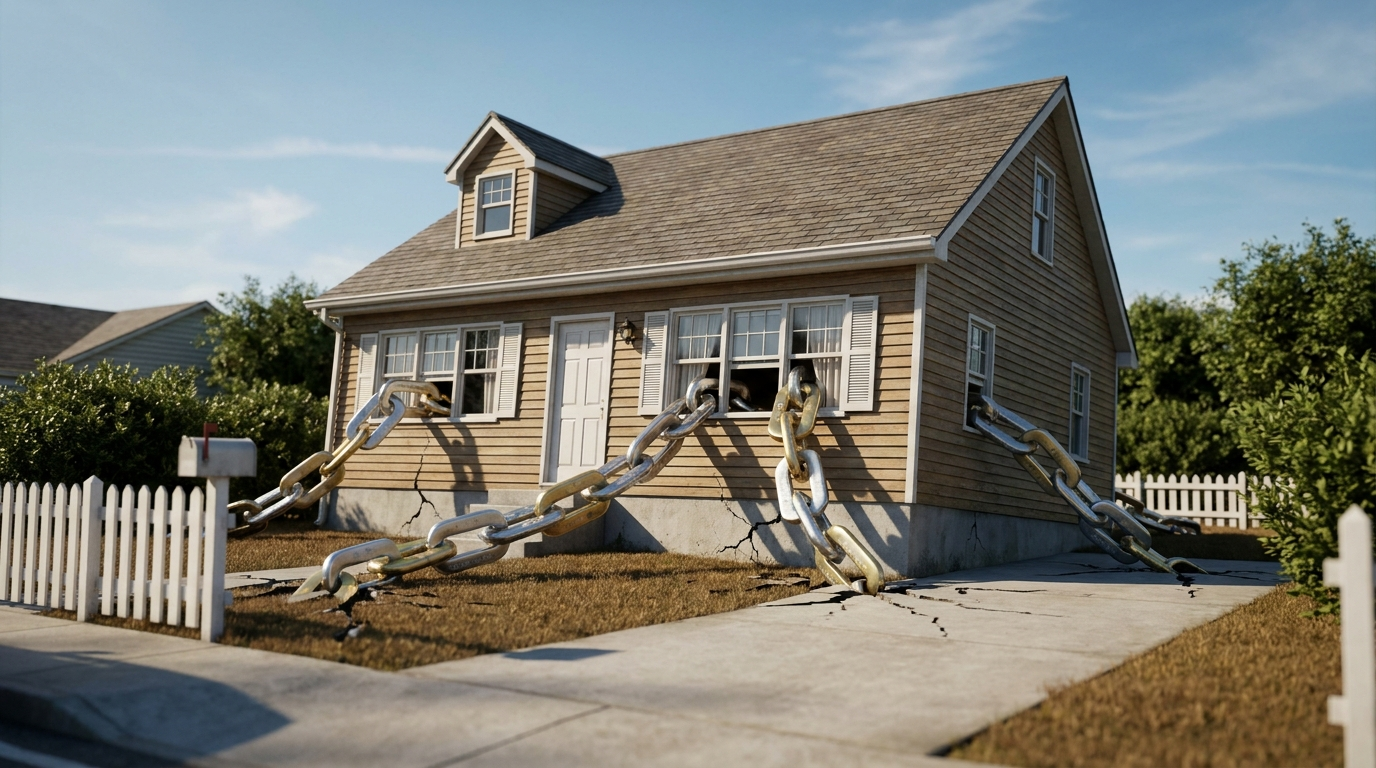
There is one question your loan officer probably won't ask you when you sit down to talk about a Home Equity Line of Credit.
"What happens if you can't make this payment?"
The answer is short. They take your house.
That is the part of the HELOC pitch that almost never makes it into the room. And it is the single reason this path — the path most banks push hardest when families want to "fix" credit card debt — is the worst path on the list for almost every family who actually takes it.
What a HELOC Actually Is
A Home Equity Line of Credit is a loan secured by your house. The bank gives you a credit line based on how much equity you have built up in your home — usually up to 80-85% of your home's value, minus what you still owe on your mortgage.
You can draw on the line as you need to. You pay interest only on what you've actually drawn. The interest rate is usually variable and tied to the prime rate plus a margin.
HELOCs typically have two phases:
- Draw period (10 years). You can borrow against the line. Most lenders require interest-only payments during this phase.
- Repayment period (10-20 years). The line closes. You start paying principal plus interest until the line is paid off.
The interest rate on a HELOC is much lower than a credit card — often 8-11% compared to 22-29% on cards. That difference is why the pitch sounds so attractive.
The Pitch That Walks Most Families Into the Trap
The pitch from your bank or mortgage broker goes like this:
"You have $80,000 in home equity sitting there doing nothing. You have $35,000 in credit card debt at 24% interest. We can give you a HELOC at 9% to pay off the cards. You save 15 percentage points of interest. Same monthly payment. Same balance. Just a smarter structure."
It sounds reasonable. It is also missing the most important fact about what just happened to your family.
What You Actually Just Did
Here is the trade you made when you signed.
Before the HELOC: You had $35,000 of unsecured credit card debt. The card companies could ding your credit. They could call you. They could sue you and try to win a judgment. They could not take your house. Federal and state laws kept that line drawn clearly.
After the HELOC: You have $35,000 of secured debt against your home. Miss the payments and the bank can foreclose. They can put your family on the street. The line is no longer drawn — your house is now collateral for what used to be unsecured credit card debt.
You did not reduce the debt. You did not pay any of it off. You moved it from the side of the ledger that could not take your house to the side of the ledger that can.
That trade is almost never the right one for any family.
The Golden Rule of Consumer Debt
Never trade unsecured debt for secured debt to get a lower interest rate. The interest rate is the visible cost. The collateral is the invisible cost. Banks pitch the interest savings because the interest rate is what shows up on the slide. The collateral never makes the slide.
The Three Specific Ways the HELOC Trap Wrecks Families
Wreck #1: A Single Bad Year
You take the HELOC at age 52. Five years later, at 57, you get laid off. The HELOC payment is $400/month. The mortgage payment is $1,800/month. Your unemployment doesn't cover both.
Before the HELOC, the same layoff would have meant card delinquency, credit damage, possibly a card lawsuit. Bad — but recoverable. You'd still have your house.
After the HELOC, the same layoff puts you 60 days behind on a loan secured by your house. The bank sends a default notice. You scramble. Your savings drain. You list the house in a panic. Foreclosure proceedings start.
One year of bad luck — the kind every family runs into eventually — turned into the loss of the house.
Wreck #2: The Cards Refill
Same trap as consolidation. The HELOC pays off the cards. The cards are now at zero. Available credit looks great. Within 18 months, the cards are back near their old balances.
Now you owe $35,000 on the HELOC AND $30,000 on cards again. Total debt has nearly doubled. And the HELOC is still secured against your house.
This is the most common ending. Not the dramatic foreclosure scenario. The slow rebuild of card debt while the HELOC sits on the house, waiting.
Wreck #3: The Real Estate Market Turns
HELOCs are sized to current home values. If the housing market turns and your home value drops 15-20%, the bank can sometimes freeze or reduce the line — even though you've been making every payment on time.
That is in the fine print. It is rarely volunteered during the pitch.
When it happens, you can find yourself with the HELOC balance you've already drawn AND no further access to the line for emergencies. The "flexibility" the loan was sold on disappears.

If a loan officer is pitching a HELOC for credit card payoff, ask one question — "If I lose my job 18 months from now, what's the worst-case outcome on this loan?" The honest answer is "we foreclose." If they soften it, they're selling, not advising.
Who a HELOC Is Actually Made For
HELOCs aren't bad products. They have legitimate uses. Just not for paying off credit cards.
HELOCs make sense for:
- Home improvements that increase the home's value. A new roof, a kitchen remodel, an addition. The improvement adds equity that backstops the loan.
- Bridging a known short-term gap. You're selling one home to buy another, and you need cash for the down payment on the new one before the old one closes.
- Emergency liquidity for high-equity homeowners. A HELOC can sit unused as a safety net for a family with strong income, low debt, and the discipline never to draw on it without a real reason.
- Investment property purchases. Specifically for cash-flowing investments where the rental income covers the HELOC payment.
None of those uses are "trade unsecured credit card debt for a loan against your house at a lower interest rate."
The Honest Comparison: HELOC vs. Other Paths for Credit Card Debt
| Path | Interest rate | What's at risk | Reduces principal? |
|---|---|---|---|
| HELOC | 8-11% (variable) | Your house | No |
| Credit Counseling | 6-9% on cards (during plan) | Credit score (mild) | No |
| Personal Loan / Consolidation | 9-18% | Credit score (if you default) | No |
| Debt Forgiveness | N/A — settles for less than face | Credit score (during process) | Yes |
| Bankruptcy | N/A — discharges | Credit score (long-term) | Yes |
Look at that "what's at risk" column. Every path on the list puts something at risk if it goes wrong. Only one path puts your house at risk for what was previously unsecured debt.
Even compared to bankruptcy — which has the longest credit hit and the public record consequence — the HELOC trap is worse for one specific reason. Bankruptcy clears the debt. The HELOC just moves it onto your house and keeps it there.
"But the Interest Savings Are Real" — Walking the Math
The most common counter-argument is that the interest savings on a HELOC are real money. Let's walk that math honestly.
Family with $35,000 in card debt at 24% APR. Two paths.
Path A: HELOC at 9% over 10 years
Monthly payment around $443. Total paid over 10 years: roughly $53,200. Interest paid: about $18,200.
Path B: Debt Forgiveness
$35,000 enrolled. Settled for an average of 50% of face value over 36 months. Total paid (including specialist fee at ~20% of original balance): approximately $24,500. Time to debt-free: 36 months.
The HELOC saves money compared to paying minimum payments on cards forever — that comparison is what the bank's pitch sets up. The HELOC does NOT save money compared to debt forgiveness, and debt forgiveness does not put your house on the line.
The bank's pitch quietly compares the HELOC to the worst alternative (paying minimums forever) and not to the actual best alternative.
The Three Honest Questions to Ask Before a HELOC
If a HELOC is on the table, run your situation through these three questions.
Question 1: Can I survive 12 months of zero income and still make this payment?
Layoffs, illness, divorce, business failure happen. If your savings can't cover 12 months of HELOC plus mortgage plus living expenses, the loan adds risk you cannot afford.
Question 2: Will I close the cards the same day the HELOC pays them off?
Same answer as the consolidation trap. If you cannot commit to closing the cards same-day, you'll end up with the HELOC AND fresh card debt within 18 months.
Question 3: Have I compared this to debt forgiveness?
If you owe $10,000+ in unsecured card debt that you cannot realistically pay off in 4-6 months, debt forgiveness usually settles for less total money paid AND keeps the house out of it. A senior specialist can run the actual numbers.
If you can't say yes to all three, don't sign the HELOC for card payoff.
What To Do Instead
For a family carrying $10,000+ in unsecured card debt, the path that almost always beats the HELOC for the same dollar amount is debt forgiveness. The reasons:
- Forgiveness reduces principal. HELOCs do not.
- Forgiveness typically finishes in 24-48 months. HELOCs run 10-20 years.
- Forgiveness puts only your credit at risk. HELOCs put your house at risk.
- Forgiveness has no public record. HELOCs become a lien on your home that anyone can search.
For families under $10,000 in card debt, the do-it-yourself avalanche method or credit counseling beats both the HELOC and debt forgiveness on cost.
For families with genuine no-other-option situations, bankruptcy may fit better than the HELOC. At least bankruptcy clears the debt rather than securing it against your home.
The Bottom Line
The HELOC trap takes one of the things the law specifically protects in your life — your home — and offers it to a bank as collateral for credit card debt that the law had specifically kept away from your home.
For a tiny number of families with strong income, big emergency funds, perfect spending discipline, and a one-time card debt event, a HELOC for card payoff might work without ending in disaster.
For everyone else, this is the path that converts a recoverable problem (card debt) into an unrecoverable one (foreclosure). The interest rate looks lower. The actual risk profile is much higher.
The Golden Rule again: never trade unsecured debt for secured debt to get a lower interest rate. Almost no situation makes that the right move.
What To Do Next
- If a HELOC pitch is on your desk right now, pause. Don't sign anything until you've compared it to debt forgiveness for your specific debt amount.
- If you already have a HELOC for card payoff and the cards are refilling, act now. The window before you're stuck with both is shrinking.
- Don't draw against the HELOC for emergencies you'd previously put on cards. That's how the line gets used up while the cards stay open.
- Take the Free Debt Relief Assessment. A senior specialist will compare paths against your actual numbers and tell you what makes sense. No cost. No obligation.
Common Questions About HELOCs and Credit Card Debt
Is a HELOC ever the right move for credit card debt?
For roughly 1 in 20 families with the right combination of strong income, large emergency fund, perfect card discipline, and a one-time card debt cause, it can work. For the other 19, it ends in either the rebuild trap (most common) or actual foreclosure (less common but real). The rate of "ends well" is too low to make this a default recommendation.
What about a cash-out refinance instead of a HELOC?
Same problem. A cash-out refinance turns unsecured card debt into mortgage debt. You traded one unsecured debt that couldn't take your house for a bigger mortgage that can. Same Golden Rule violation.
Can the bank really foreclose on a HELOC?
Yes. A HELOC is secured by your home. Foreclosure procedures vary by state — judicial foreclosure states (FL, NY, IL) require a court process that takes 6-18 months. Non-judicial states (CA, TX, AZ) move faster, sometimes in 4-8 months. Either way, the foreclosure right is real.
If I already have a HELOC and the cards are refilling, what do I do?
The first move is to stop and assess. The HELOC is now sunk cost — you can't easily un-do it. The fresh card debt may qualify for debt forgiveness. A senior specialist can review the situation and tell you the realistic path forward, which usually involves freezing the HELOC line, closing the cards, and addressing whichever debts now qualify for resolution.
What if I have equity but I want to use a HELOC for actual home improvements?
That's a different conversation entirely. HELOCs for value-adding home improvements are a legitimate use of the product. The improvement increases equity, which backstops the loan. The risk profile is reasonable. Just don't roll credit card debt into the same line.
Is the interest on a HELOC tax-deductible?
Under current federal tax law, HELOC interest is deductible only if the proceeds are used to "buy, build, or substantially improve" the home that secures the loan. Interest on a HELOC used to pay off credit cards is NOT tax-deductible. The tax-deduction argument that loan officers sometimes make about HELOCs vs. cards usually does not apply to debt-payoff use.
What if I'm being told I should refinance my mortgage to pull out cash and pay off cards?
Same trade as a HELOC. The unsecured card debt becomes secured mortgage debt. You may also be resetting a 5-year-old 3% mortgage to a new 7%+ mortgage, which can cost more in interest over the life of the loan than the card debt would have. Run the all-in math against debt forgiveness before signing.
Sources & References
Federal Reserve Board, HELOC market data and consumer guidance. Consumer Financial Protection Bureau, home equity line of credit guidance. Internal Revenue Code Section 163, mortgage interest deduction rules and the "buy, build, or substantially improve" requirement (Tax Cuts and Jobs Act of 2017). State-by-state foreclosure procedure variation (judicial vs. non-judicial). Federal Trade Commission, home equity loan consumer alerts.
This article is for consumer education only. It is not legal, tax, or financial advice. Your Debt Advocate is not a law firm, lender, or financial advisor. Every household's situation is different. A senior debt specialist can review your specific numbers through the Free Debt Relief Assessment.
Find Out What Actually Fits Your Situation
If you're being pitched a HELOC for credit card debt, get a second opinion before you sign. A senior specialist will run your actual numbers against the real alternatives — including the path that doesn't put your house on the line. No cost. No obligation.
Free Assessment
If a HELOC is on the table for card payoff, get a second opinion before you sign.
The Golden Rule of consumer debt: never trade unsecured debt for secured debt for a lower interest rate. The savings show on the slide. The collateral never does.