5 Ways Out of Your Consumer Debt — and Why Most People Pick the Wrong One
By Your Debt Advocate · Updated 2026
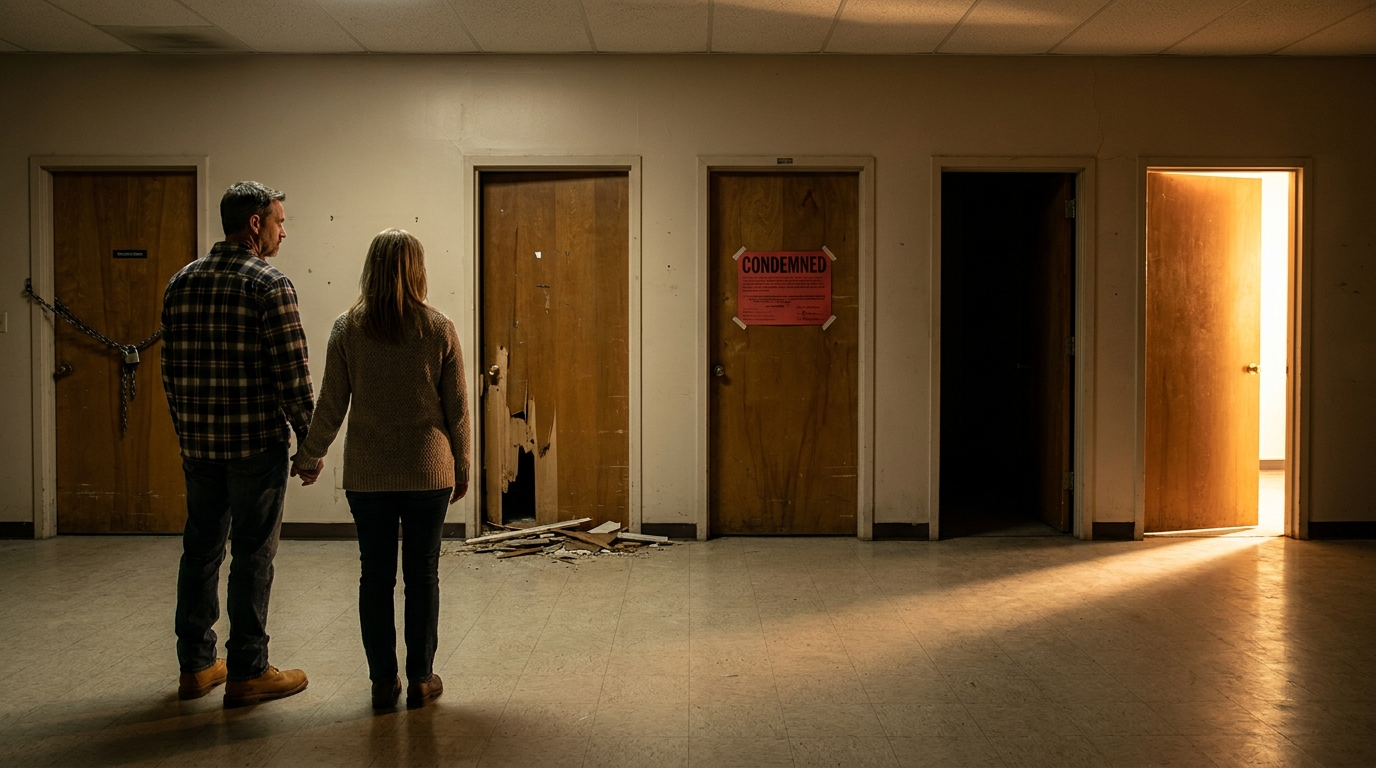
Most people stuck in credit card debt only know about two ways out. Pay it off slowly. Or file bankruptcy.
There are five. And the path most people don't know about works better than the four they do — for most families who owe more than $10,000 and can't see daylight on their own.
This page lays out all five. Honestly. With the upside and the real downside of each. Including the one almost nobody hears about until it's already too late.
Five Paths Most Families Consider, Side by Side
If you're carrying serious unsecured debt — credit cards, personal loans, medical bills — almost every honest path out falls into one of these five categories.
| Path | What It Actually Is | Best For | What to Watch Out For |
|---|---|---|---|
| 1. Credit Counseling | A nonprofit agency puts you on a 3-5 year payment plan and negotiates lower interest with your creditors. | People who can pay every dollar back if rates come down. | Your card companies pay the agency a "fair share" of every payment you make. They're not as neutral as they sound. |
| 2. Debt Consolidation | One new loan that pays off your old debts. You pay off the new loan in fixed monthly payments. | People with strong credit who can promise themselves they will not use the cards again. | Roughly one-third of consolidation borrowers re-accumulate card balances within 12-18 months, with the share growing over time. Many end up with the new loan AND fresh card debt. |
| 3. HELOC | A home equity line of credit. You borrow against the value of your house to pay off cards. | Almost no one — for this purpose. | You just turned unsecured credit card debt into a loan against your home. Miss a payment and the bank can foreclose. |
| 4. Bankruptcy | A federal court process that discharges your debts (Chapter 7) or reorganizes them under a payment plan (Chapter 13). | Families who genuinely have no other option and need a clean slate now. | Stays on your credit report for 7-10 years. Public record for 20. Shows up on every job application, every mortgage application, the rest of your life. |
| 5. Debt Forgiveness | A structured negotiation that resolves your debts for less than face value, typically over 24-48 months. | Families with $10,000+ in unsecured debt who can't realistically pay it off in 4-6 months on their current income. | Temporary credit dip during the process. Must stop using the cards. Forgiven amounts may be reportable to the IRS. |
Now look at that table again. Notice something?
Three of these paths (counseling, consolidation, HELOC) all share the same mechanic at the bottom: you keep paying every dollar back, plus interest, at rates close to what got you in trouble in the first place. None of them reduce the principal. The interest meter never stops. You're just trying to outrun the same math that already buried you.
For most families with $30,000 of credit card debt at 22% interest, that math doesn't work. It's why most people who try one of these paths end up worse off than they started.
Bankruptcy works — but it's the heaviest tool on the table. Most people don't actually need it.
That leaves debt forgiveness. Which is exactly the path the credit card industry doesn't want you to know about.
Why Most People Pick the Wrong Path
Here is what usually happens. You get behind on a few cards. The collection calls start. You search "how to get out of credit card debt." Three things pop up:
- An ad from a credit counseling agency promising "lower your rates today"
- An ad from your existing bank offering a debt consolidation loan
- A "How much debt do you have?" form that promises to help — but actually farms your contact info out to a debt consolidation lender. Those lenders charge fair-credit borrowers 27-31% APR on average, sometimes higher than the credit card rates you're trying to escape
What you almost never see in those first three results is the path that actually fits most people in serious unsecured debt. That's not random. The credit counseling industry is partly funded by the card companies themselves. The consolidation industry sells loans — sometimes at rates that rival your existing card APRs. And the lead-buying sites that promise to "help" you assess your situation? They sell your contact information to those same consolidation lenders.
The path that costs the card industry the most money — debt forgiveness — has the smallest advertising budget. Which is exactly why almost nobody hears about it until they've already spent two years on a credit counseling plan that didn't fix anything.
Path 1: Credit Counseling
What it actually is
Credit counseling is run by nonprofit agencies. The agency calls your card companies, negotiates lower interest rates, and sets you up on a 3-5 year repayment plan. You make one monthly payment to the agency. They distribute it to your creditors.
Who it's made for
People with under $10,000 in card debt who can pay every dollar back if the interest rates come down. Stable income. No major life event coming.
The honest tradeoff
The "nonprofit" label can be misleading. Most credit counseling agencies are partly funded by your card companies through a quiet kickback called the "fair share." For every dollar you pay through the plan, the card company sends a small percentage back to the agency. That's why they're so willing to take your case. Their clients are the card companies, not you.
You also give up control. Once you enroll, you stop paying your creditors directly. Your money goes to the agency first; they decide when and how to distribute it. If the timing slips or the agency makes an error, your credit can take the hit even though you paid on time.
And credit counseling does not reduce what you owe. It only lowers the interest. You still pay every dollar of principal. For most families with serious card debt, that math doesn't work.
Bottom line: Better than ignoring the problem. Probably not the right tool if you owe more than $10,000.
Read the full breakdown of credit counseling vs forgiveness ›
Path 2: Debt Consolidation
What it actually is
You take out one new loan — usually a personal loan from a bank or online lender — and use it to pay off all your existing credit cards. Now you have one loan with one fixed payment, ideally at a lower interest rate, instead of five card balances at 22-29%.
Who it's made for
People with strong credit (700+ FICO), stable income, and the discipline to keep the cards at zero after they're paid off.
The honest tradeoff
This is the path most people pick. It is also the path most people regret.
Here's why. The consolidation loan pays off your cards. Your card balances drop to zero. Your available credit suddenly looks great. So what does your card company do? They mail you a credit limit increase. The cards feel "free" again. A small purchase here, a small one there. Within 18 months, the cards are back near their old balances. You now owe the consolidation loan AND new card debt. You doubled your debt while trying to fix it.
Consumer credit research finds that roughly one-third of consolidation borrowers re-accumulate card balances within 12-18 months, and the share grows in the years that follow. The math trap is common enough that lenders and counselors plan around it.
Bottom line: Works for the disciplined minority. A trap for the majority.
Path 3: HELOC (Home Equity Line of Credit)
What it actually is
You borrow against the equity in your home. The bank gives you a line of credit at a lower interest rate than your cards. You use that line to pay off the cards.
Who it's made for
For paying off credit cards? Almost nobody.
The honest tradeoff
This is the worst of the five for most families, and it is sold the hardest by your bank because it is the most profitable for them.
Here is what you just did. You had unsecured credit card debt. The card company can ding your credit. They can sue you. They cannot take your house.
You traded that for secured debt. The HELOC is secured by your home. Miss the payments and the bank can foreclose. You now owe the same amount of money, except your house is on the line for it.
And the cards? Most people who pay off cards with a HELOC run them back up. Now you have the HELOC AND fresh card debt. Now your house is on the hook for both.
Bottom line: Don't. Almost no situation makes a HELOC for credit card payoff the right move.
Path 4: Bankruptcy
What it actually is
A federal court process. There are two main types for consumer debt.
Chapter 7 ("liquidation") wipes most unsecured debts in 3-6 months. You may have to surrender certain assets. You qualify based on income.
Chapter 13 ("reorganization") puts you on a court-supervised 3-5 year payment plan. Some debts get reduced. Some get paid in full. You keep your house and car as long as you stay on the plan.
Who it's made for
Families with no realistic path to ever pay these debts back. Job loss, medical catastrophe, divorce, business failure. Bankruptcy gives them a clean slate when nothing else can.
The honest tradeoff
Bankruptcy works. The clean slate is real. But the cost is bigger than most people realize at the time they file.
- Chapter 7 stays on your credit report for 10 years. Chapter 13, 7 years.
- Bankruptcy is a public court record. Anyone with a name and a docket search can find it. That public record stays online for roughly 20 years.
- Job applications often ask if you have ever filed bankruptcy. So do mortgage applications. Some loans. Some apartment leases. The honest answer doesn't change in 7 years. The honest answer is "yes" for the rest of your working life.
Most people who file bankruptcy could have resolved their debt another way. They just didn't know the other ways existed in time.
Bottom line: The right tool for some families. The last tool to reach for, not the first.
Read the full breakdown of bankruptcy and its alternatives ›
Path 5: Debt Forgiveness
What it actually is
A structured negotiation that resolves your unsecured debts for less than the face value. Instead of paying every dollar plus interest plus fees, you and the creditor agree on a reduced amount that closes the account.
Here's why creditors agree. Once a card account goes into serious delinquency, the card company sells it to a debt buyer for pennies on the dollar — often 2 to 5 cents per dollar of face value. That number is public record. Anyone the card company sells to is making money if they collect more than 2 cents on the dollar. So the math for negotiating is real. There is room.
The process typically runs 24-48 months. During that window, you stop paying the original card and instead build savings into a dedicated account. The senior specialist working your case negotiates with each creditor as the savings build, settling each account one at a time. When all the accounts are settled, you're done.
Who it's made for
Families with $10,000+ in unsecured debt — credit cards, personal loans, medical bills, store cards — who cannot realistically pay it off in 4-6 months on their current income. Fixed-income retirees. Families on a single income with kids. People hit by a medical event or job change.
The honest tradeoff
It is not free of consequences. You should know the tradeoffs before you start.
- Credit dip during the process. Your score will drop while accounts are negotiated. It usually recovers within 12-24 months after the program ends.
- You stop using the cards. The cards have to go. That part is non-negotiable.
- Possible 1099-C at tax time. Forgiven amounts over $600 are sometimes reported to the IRS as income. There is an "insolvency exclusion" that protects most families from owing tax on the forgiven amount, but you'll want a tax preparer who knows the rule.
- Some creditors may file a lawsuit. Most settle before that happens. A senior specialist's job is to negotiate before it gets there.
The reason debt forgiveness is the right path for most families with $10,000+ in unsecured debt is the math. You pay less. You finish faster than the 30-year minimum-payment treadmill. You don't lose your home. You don't end up with a 20-year public record like bankruptcy.
The reason most families don't hear about it is the people who profit from the four other paths spend a lot of money making sure you hear about those first.
Bottom line: The strongest fit for most families with serious unsecured debt who qualify.

Most card companies sell delinquent accounts to debt buyers for 2-5 cents on the dollar. That number is public record. It is also why a serious negotiation can settle a $10,000 balance for far less than $10,000 — there's already a ton of room built into the math.
What If You Owe Less Than $10,000?
If you owe under $10,000, debt forgiveness usually isn't the right tool. The setup costs eat too much of the savings. Most of the time, smaller card debt can be cleared on your own with three honest moves:
- Stop adding to it. Lock the cards. The Goal is zero new charges starting today.
- Throw the avalanche method at it. Pay minimums on every card except the one with the highest interest rate. Throw every extra dollar at the highest-rate card. Once it's clear, roll those payments into the next card. Repeat.
- Ask your card company for a hardship rate reduction. Most card companies have a hardship program that drops the rate to 0-9% for 12 months if you call and ask. Most people never call.
That's not always going to be enough. If you have $8,000 spread across 4 cards at 26% interest and you can only pay the minimums, the math still doesn't work. But for most balances under $10,000, the do-it-yourself path beats hiring anyone.
The Honest Bottom Line
You have five common paths out of consumer debt. The right one depends on three things: how much you owe, what you make, and how much time you have.
- Under $10,000? Most times you can do it yourself. Avalanche method + a hardship rate request.
- $10,000-$50,000 of unsecured debt and you can't realistically pay it off in 4-6 months? Debt forgiveness fits more families in this range than any other path.
- Strong income, strong credit, and the discipline to never touch the cards again? Consolidation can work. Most people fail the discipline test.
- Job loss, medical catastrophe, no realistic income to cover even reduced debt? Bankruptcy may be the right tool. A bankruptcy attorney can tell you if you qualify.
- HELOC? No. Don't trade unsecured debt for a loan against your house.
If you've read this far and you still aren't sure which path fits, that's exactly what the Free Debt Relief Assessment is for. A senior debt specialist will look at your actual numbers and tell you which of these paths makes sense for you and your family. In plain English. No cost.
What To Do Next
- Pull your numbers together. Total balances on every card. Interest rate on each. Minimum payment on each. Your monthly take-home pay. Five minutes of math.
- Decide on the path that fits your numbers. Use the bottom-line guide above. If it points at debt forgiveness, the next step is the Free Debt Relief Assessment.
- Do not stop paying yet. Until a senior specialist tells you otherwise, keep paying minimums. Stopping cold can wreck your credit and weaken your negotiating position.
- Do not sign anything new. If a credit counseling agency, a consolidation lender, or a "debt help" call center reaches out, don't sign anything until someone independent has reviewed your situation.
- Take the Free Debt Relief Assessment. A senior specialist will review your situation, tell you which path fits, and walk you through what comes next. No cost. No obligation.
Common Questions About Getting Out of Credit Card Debt
How fast can I actually get out of $30,000 of credit card debt?
Depends on the path. Minimum payments on $30,000 at 22% APR can take 30+ years to clear. Credit counseling, 3-5 years if it works. Consolidation, 3-5 years if you don't relapse. Debt forgiveness, typically 24-48 months. Bankruptcy Chapter 7, 3-6 months but with the long credit hit.
Will any of these paths hurt my credit?
All of them affect your credit at least temporarily. Credit counseling is a soft hit while you're on the plan. Consolidation usually helps your credit if you don't run the cards back up. HELOC has limited credit impact unless you miss payments. Bankruptcy is a hard hit for 7-10 years. Debt forgiveness causes a temporary dip during the program that usually recovers within 12-24 months after.
Are debt forgiveness companies a scam?
Some are. The industry has plenty of fly-by-night operators who take fees and disappear. The Federal Trade Commission has rules under the Telemarketing Sales Rule that prohibit charging upfront fees before settling at least one of your debts. Any operator that asks for fees before delivering a settlement is breaking the rule. The Free Debt Relief Assessment connects you with senior specialists who follow the rules.
Will I get sued by a credit card company?
It happens. Most card companies prefer to settle before filing suit because lawsuits are expensive and uncertain for them. A senior specialist's job is to negotiate before it gets there. If a suit is filed during the process, the specialist coordinates the response.
What about the IRS? Will I owe taxes on forgiven debt?
Sometimes. The IRS treats forgiven debt over $600 as potentially taxable income and the creditor may issue a Form 1099-C. There is an "insolvency exclusion" that protects most families — if your total debts exceeded your total assets at the time of the settlement, the forgiven amount is generally not taxable. A tax preparer who knows the rule files the right form.
Can I do debt forgiveness on my own without paying anyone?
You can try. Some homeowners successfully negotiate one or two settlements directly with creditors. The challenge is leverage. A senior specialist with experience knows what each creditor typically accepts, the right time in the cycle to negotiate, and the documentation that closes the deal cleanly. Doing it alone often produces partial settlements that leave you exposed to the unsettled balances.
What's the difference between debt forgiveness and debt settlement?
"Debt forgiveness" and "debt settlement" describe the same underlying process — negotiating a creditor down to a reduced payoff. The reason we use the word "forgiveness" is that "settlement" has been associated with the worst operators in the industry — settlement mills that charge upfront fees, do almost nothing, and leave families worse off. The path itself is real and works. The bad actors gave the term a bad name.
Sources & References
Federal Reserve consumer credit data (G.19). New York Federal Reserve Quarterly Report on Household Debt and Credit. Consumer Financial Protection Bureau, debt collection and consumer credit research. Federal Trade Commission, "The Structure and Practices of the Debt Buying Industry" (2013) — 4.0¢/dollar average debt buyer pricing. FTC Telemarketing Sales Rule (16 C.F.R. Part 310). FICO published credit score impact data. Internal Revenue Code Section 108, insolvency exclusion. Statute of limitations on consumer debt varies by state (3-6 years for most credit card debt; NY shortened to 3 years in 2022).
This article is for consumer education only. It is not legal advice or tax advice. Your Debt Advocate is not a law firm and does not provide legal services. Every household's situation is different — the right path depends on your debt amount, income, state, and specific circumstances. A senior debt specialist can review your situation through the Free Debt Relief Assessment and walk you through your options.
Find Out Which Path Actually Fits You
Other families started exactly where you are. The Free Debt Relief Assessment connects you with a senior specialist who will review your numbers, explain which path makes sense for you, and walk you through the next step. No cost. No obligation. No high-pressure pitch.
Free Assessment
Find out which path actually fits your situation. A senior specialist will review your numbers and walk you through what comes next.
Most families don't pick the wrong path because they're careless. They pick the wrong path because the right one didn't show up in their first three search results.